



Why Every Business Needs a Business Internet Failover Strategy
Modern businesses run on the internet. From cloud platforms and communication tools to payment processing and customer service systems, reliable connectivity is the backbone of daily operations. When the internet goes down, even briefly, productivity stops, transactions fail, and customers are left waiting.
This is why every organisation, be it large or small, needs a business internet failover strategy. By combining a 4G backup router, a redundant internet connection, and automated switching, businesses can protect network uptime, ensure business continuity, and strengthen their disaster recovery capabilities.
In this blog, we’ll explore why failover connectivity has become essential and how 4G and 5G backup solutions keep organisations running smoothly even when the unexpected happens.
Business Internet Failover: The Foundation of Network Uptime
A business internet failover system is a network configuration that automatically switches to a secondary connection when the primary internet link fails. Instead of experiencing a full outage, your network continues to operate using a backup connection, such as a 4G or 5G wireless network.
Internet downtime can be extremely costly. Many businesses depend on cloud applications, online transactions, and VoIP communication to function. When connectivity fails, productivity drops instantly, and revenue can be lost within minutes.
A failover system eliminates this risk by ensuring there is always a backup path for internet traffic.
Key advantages of business internet failover
- • Continuous connectivity during outages
- • Minimal operational disruption
- • Improved network resilience
- • Stronger disaster recovery planning
Instead of scrambling for solutions when the internet stops working, a failover system ensures the transition to backup connectivity happens automatically.
Understanding Redundant Internet Connection Infrastructure
A redundant internet connection means having two independent connections available at all times—typically a primary wired connection and a secondary wireless connection.
Common combinations include:
- • Fibre + 4G backup router
- • NBN + 5G wireless internet
- • Fibre + secondary broadband line
Wireless technologies such as 4G and 5G are particularly effective for redundancy because they operate independently of physical infrastructure. If a fibre cable is cut or a network provider experiences an outage, the wireless connection remains available.
Businesses today increasingly rely on hybrid connectivity models that combine fibre speed with wireless resilience.
Why redundancy matters
Internet outages can occur due to many reasons:
- • Infrastructure damage
- • ISP service failures
- • Natural disasters
- • Power outages
- • Construction accidents
A redundant connection ensures these disruptions do not halt operations. The backup link activates immediately and keeps essential systems functioning.
How a 4G Backup Router Enables Automated Switching
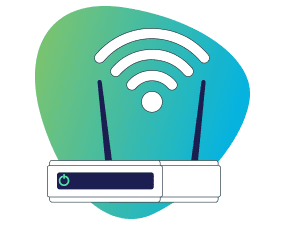
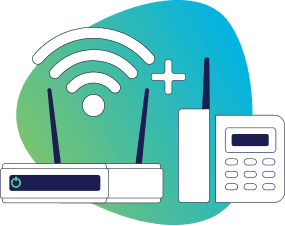
A 4G backup router is a specialised networking device that monitors internet connectivity and automatically switches between connections.
When the primary connection fails, the router detects the outage and activates the backup link using cellular data. Once the main connection is restored, traffic returns to the original network.
This process is referred to as automated switching. Its step-by-step method includes:
- • The router continuously monitors network health.
- • When the primary connection fails, the router detects the disruption.
- • The system instantly activates the backup connection.
- • Network traffic reroutes through the backup network.
- • Once the primary connection returns, the router automatically switches back.
This seamless transition ensures employees, customers, and systems experience little or no disruption.
Modern failover solutions can perform the switch in seconds or even milliseconds, maintaining operational continuity for critical applications.
Why 5G is Transforming Business Internet Failover
While 4G has long been used as a backup network, 5G technology has dramatically improved failover performance.
5G offers significantly higher speeds, lower latency, and greater capacity compared with earlier mobile networks. This means the backup connection can support more users and bandwidth-intensive applications, such as video conferencing, cloud platforms, and VoIP.
Benefits of 5G failover connectivity
- • Faster backup internet speeds
- • Lower latency for real-time applications
- • Greater bandwidth capacity
- • More reliable wireless connectivity
For many organisations, 5G is not only a backup option but also a primary connection in areas with limited fibre infrastructure.
In regions where wired connectivity may be unreliable, a 5G solution provides high-speed internet with the added advantage of built-in redundancy.

The Role of Failover in Business Continuity
Every business should have a business continuity plan that outlines how operations will continue during unexpected disruptions.
Internet outages are among the most common causes of operational downtime. A failover strategy ensures digital systems remain accessible during these events.
Systems protected by failover connectivity
- • Cloud software and CRM platforms
- • VoIP phone systems
- • Payment processing systems
- • Security cameras and monitoring systems
- • Online ordering platforms
- • Remote working systems
Without backup connectivity, even a short outage can bring these systems offline. With failover protection, employees can continue working, and customers may not even notice the disruption.
Internet Failover and Disaster Recovery Planning
Disaster recovery is about restoring operations after unexpected disruptions. While many organisations focus on data backups and server redundancy, internet connectivity is often overlooked.
A failover strategy is one of the simplest yet most effective ways to strengthen disaster recovery planning.
Failover protects against
- • ISP outages
- • Data centre disruptions
- • infrastructure damage
- • network congestion
- • environmental incidents
Because the backup network is independent of the primary infrastructure, operations can continue while the primary connection is restored.
This capability is particularly valuable for industries where downtime directly impacts revenue, such as retail, healthcare, logistics, and finance.
Industries That Depend on Network Uptime
While all businesses rely on internet connectivity today, some industries are especially vulnerable to outages.
Retail and hospitality
Payment terminals, ordering systems, and POS platforms all depend on connectivity. Failover ensures transactions continue during outages.
Healthcare
Medical systems, patient records, and telehealth platforms require uninterrupted access.
Logistics and transport
Fleet tracking, communication, and dispatch platforms rely on stable networks.
Corporate offices
Remote collaboration tools and cloud platforms require constant connectivity.
For these industries, network uptime is not just a convenience; it is essential for daily operations.
How Automated Failover Improves Productivity
Manual network recovery can take hours.
IT teams must detect the problem, troubleshoot the connection, and manually switch to alternative connectivity. During this time, employees may be unable to work.
With automated switching, failover happens instantly.
This provides several productivity advantages:
- • Minimal downtime
- • Reduced IT workload
- • Faster incident recovery
- • Consistent network performance
Employees remain connected to critical applications, communication systems, and cloud platforms without interruption.
How to Build a Reliable Failover Strategy
Implementing a failover solution requires careful planning. Businesses should consider several factors:
Network requirements
Assess bandwidth requirements, user count, and application demands.
Connectivity options
Choose the right combination of fibre, NBN, 4G, or 5G connectivity.
Hardware selection
A high-quality 4G backup router or 5G gateway ensures reliable automated switching.
Monitoring and management
Continuous monitoring ensures connectivity issues are detected quickly.
By combining these elements, organisations can build a failover strategy that protects network uptime and supports long-term growth.
Why Future-Ready Businesses Invest in Failover Connectivity
As businesses become increasingly digital, the importance of connectivity continues to grow. Cloud computing, remote work, IoT devices, and real-time communication tools all rely on stable internet connections. A single outage can disrupt operations across an entire organisation.
Investing in a business internet failover solution is no longer optional, but rather a strategic necessity.
Companies that implement failover systems gain several long-term advantages:
- • Stronger operational resilience
- • Reduced downtime costs
- • Improved customer experience
- • Greater productivity and efficiency
Most importantly, they gain peace of mind knowing their network infrastructure can withstand unexpected disruptions.
Stay Connected with Trikon’s 4G and 5G Internet Solutions
Reliable connectivity is essential for modern businesses, and that is where Trikon comes in. Trikon provides advanced wireless connectivity solutions to keep businesses online with fast, dependable 4G and 5G internet services.
We offer high-performance 5G broadband designed for modern organisations that require fast, scalable connectivity. Our solutions can also incorporate failover capabilities, allowing businesses to maintain connectivity even if their primary internet connection is disrupted.
With strong speeds, flexible connectivity options, and expert support, we help organisations implement reliable networking infrastructure that supports business continuity and long-term growth.
If your organisation cannot afford internet downtime, it may be time to implement a redundant internet connection with a 4G backup router or 5G failover solution.
Contact us today to explore future-ready connectivity solutions that protect your network uptime and keep your business running—no matter what happens.
Recent Post
-
Cloud CCTV Storage vs. Local NVR: Best Retail Shop Security Guide
25/06/2026
-
Why Every Business Needs a Business Internet Failover Strategy
16/06/2026
-

Beyond Voicemail: How AI Call Summaries Automate Business Communication
29/05/2026
-
VoIP Security 101: How to Protect Your Business from Vishing
25/05/2026
-

How AI Business Phone Features are Transforming VoIP for Sales Teams
27/04/2026
-

NBN Enterprise Ethernet vs. Standard NBN: Why Your Business Needs an Upgrade
22/04/2026
-

How CCTV Video Analytics Transforms Customer Behaviour into Actionable Data
25/03/2026
-
NBN Speed Tiers for SMBs: Which Plan Does Your Business Actually Need?
14/03/2026
-

Essential Phone Answering Systems for Customer Loyalty
27/10/2025
-
5G Internet vs NBN: What Every Australian Business Needs to Know
17/10/2025
-

The Impact of NBN on Rural Connectivity
24/09/2025
-

How Business Phones and VoIP Can Improve Remote Team's Productivity
12/09/2025
-
Why CCTV Security Systems are Vital for Australian Businesses
29/08/2025
-

Trikon VoIP: The Game Changer for Small Business Communication
29/08/2025
-

NBN Pros & Cons: Comparing Internet Options in Australia
24/07/2025
-
Must-Have Features of a Business Phone System for Australian Business
11/07/2025
-
Trikon and Velocity Frequent Flyer
27/09/2023
-
Why the NBN is good for business?
30/05/2023
-

An Official Great Place to Work® Certified company!
11/05/2023
-

Factors to Consider While Choosing Hosted PBX Provider
08/02/2023
-
The Comprehensive Guide To VoIP Phone Systems
05/12/2022
-

Benefits of Cloud-Based Communications in eCommerce Business
25/11/2022
-

VoIP vs PBX: How to Choose the Right Phone System for Your Business
07/10/2022
-

Common Mistakes to Avoid When Choosing a Business VoIP Service
07/10/2022
-

5G and small businesses in Australia
27/01/2022
-

5G and the new era of Blockchain and NFT's
27/01/2022
-

The Significance of 5G in a Metaverse Universe
27/01/2022
-

Why does your business need a website?
27/01/2022
-

Trikon 5G is the perfect internet solution for Australian smart homes
15/10/2021
-

5G is not just another 'G'
16/08/2021
-

How can Australian businesses bounce back from the pandemic pandemonium
08/07/2021
-
Map of the new digital Australia
03/12/2020
-

Jump start business communication with hosted phone system
05/05/2020
-
6 tips to optimise & setup office internet
27/04/2020
-

Covid-19: not a pandemic for businesses
20/04/2020
-

Data usage & estimates
20/03/2020
-

SIP trunking: future of VoIP & streaming media
05/03/2020
-

Things you need to know about 5g
16/09/2019
-
The future is cloud communications
20/09/2019
-
How to shift from ISDN to SIP lines, its value & utilities?
18/09/2019
-

Future ready small business phones systems & why you should shift to them
13/09/2019
-

How can managed printing help my business?
11/09/2019
-
Cloud phone vs old pbx systems
09/09/2019
-

Don’t lose on your small business connectivity
1/09/2019

Quick contact
Quick contact
Unbeatable Deals
Grab your phone and talk to us NOW!
Secure your network with the best Firewall Protection for just $10/day with a contract term of 36 months

Protect your premises with just $24.95* per CCTV camera/month with a contract term of 60 months

Boost your office tech with a massive 60% off on security, printing and communication gadgets!
Be part of something
extraordinary!
Join us and reinvent your career by collaborating with
world class teams and extraordinary individuals.











Customer Care call queue waiting: 
seconds